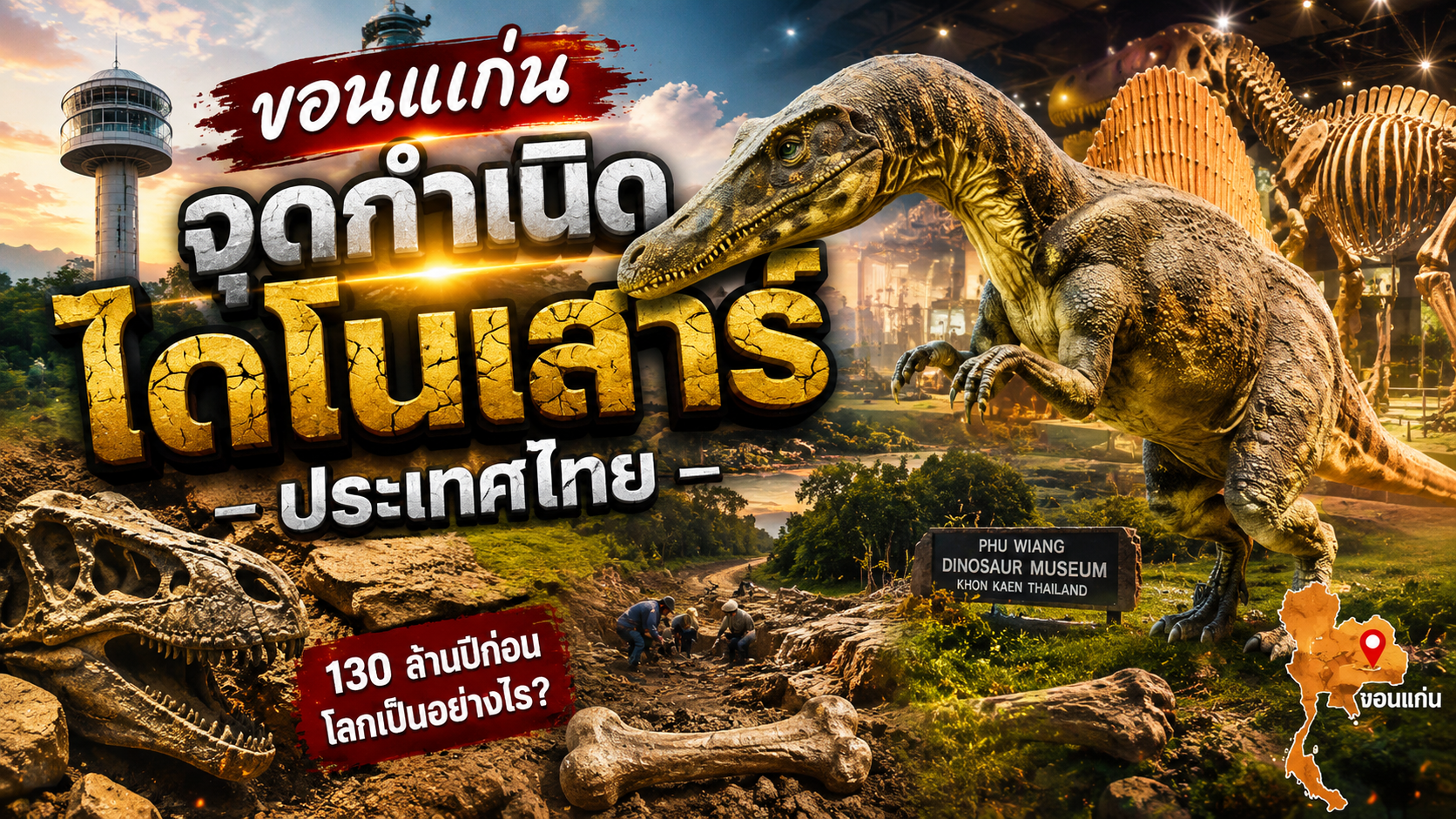
ขอนแก่น จุดกำเนิดไดโนเสาร์ประเทศไทย
ดินแดนที่ปลุกอดีตกว่า 130 ล้านปีให้กลับมามีชีวิต
เมื่อกล่าวถึงจังหวัดขอนแก่น หลายคนอาจนึกถึงเมืองศูนย์กลางเศรษฐกิจของภาคตะวันออกเฉียงเหนือ เมืองแห่งการศึกษา หรือเมืองแห่งอาหารอีสาน แต่มีอีกบทบาทหนึ่งที่สำคัญไม่แพ้กัน นั่นคือ “แหล่งกำเนิดการศึกษาซากดึกดำบรรพ์ไดโนเสาร์ของประเทศไทย” ซึ่งทำให้ชื่อของขอนแก่นได้รับการยอมรับในวงการบรรพชีวินวิทยาระดับโลก พื้นที่อำเภอเวียงเก่า โดยเฉพาะบริเวณ อุทยานแห่งชาติภูเวียง เป็นสถานที่ที่นักวิทยาศาสตร์ค้นพบซากไดโนเสาร์ชิ้นสำคัญเป็นครั้งแรกของประเทศไทย นำไปสู่การเปลี่ยนแปลงองค์ความรู้ด้านธรณีวิทยาและบรรพชีวินวิทยาของประเทศอย่างสิ้นเชิง
การค้นพบที่เปลี่ยนหน้าประวัติศาสตร์ไทย
เรื่องราวเริ่มต้นในปี พ.ศ. 2519 เมื่อมีการพบกระดูกสัตว์ขนาดใหญ่บนภูเวียง ต่อมาคณะนักธรณีวิทยาและนักบรรพชีวินวิทยาได้เข้าตรวจสอบอย่างละเอียด จนพบว่าเป็นซากกระดูกของไดโนเสาร์กินพืชขนาดมหึมา การค้นพบครั้งนั้นถือเป็นจุดเริ่มต้นของการศึกษาซากไดโนเสาร์อย่างจริงจังในประเทศไทย และทำให้ประเทศไทยก้าวเข้าสู่แผนที่โลกด้านการวิจัยไดโนเสาร์ หลังจากนั้นมีการสำรวจเพิ่มเติมอย่างต่อเนื่อง จนพบซากดึกดำบรรพ์จำนวนมาก ทั้งไดโนเสาร์กินพืช ไดโนเสาร์กินเนื้อ จระเข้โบราณ เต่า ปลา และสิ่งมีชีวิตอีกหลากหลายชนิดที่เคยอาศัยอยู่เมื่อกว่า 130–140 ล้านปีก่อน ในยุคครีเทเชียสตอนต้น
ภูเวียง…หน้าต่างสู่โลกเมื่อ 130 ล้านปีก่อน
เมื่อย้อนเวลากลับไปหลายร้อยล้านปี พื้นที่ขอนแก่นไม่ได้เป็นที่ราบสูงอย่างในปัจจุบัน แต่เป็นพื้นที่ชุ่มน้ำ เต็มไปด้วยแม่น้ำ ทะเลสาบ และป่าไม้เขตร้อน สัตว์นานาชนิดอาศัยอยู่ร่วมกัน ทั้ง
* ไดโนเสาร์กินพืชขนาดยักษ์
* ไดโนเสาร์นักล่า
* จระเข้โบราณ
* เต่ายุคดึกดำบรรพ์
* ปลาโบราณ
* พืชโบราณหลากหลายชนิด
ตะกอนที่ทับถมกันเป็นเวลาหลายล้านปีช่วยรักษาซากของสิ่งมีชีวิตเหล่านี้ไว้ จนกลายเป็นฟอสซิลที่นักวิทยาศาสตร์สามารถศึกษาได้ในปัจจุบัน
ภูเวียงโกซอรัส : ไดโนเสาร์ไทยตัวแรก
หนึ่งในการค้นพบที่สำคัญที่สุดคือ
ภูเวียงโกซอรัส สิรินธรเน
ไดโนเสาร์กินพืชคอยาวขนาดใหญ่
มีความยาวประมาณ
* 15–20 เมตร
* น้ำหนักหลายสิบตัน
ได้รับพระราชทานนามเพื่อเฉลิมพระเกียรติ สมเด็จพระกนิษฐาธิราชเจ้า กรมสมเด็จพระเทพรัตนราชสุดาฯ การค้นพบชนิดนี้สร้างชื่อเสียงให้ประเทศไทยในเวทีวิชาการระดับโลก
นักล่าแห่งภูเวียง
นอกจากไดโนเสาร์กินพืชแล้ว ยังพบไดโนเสาร์กินเนื้อหลายชนิด เช่น
* สยามโมไทรันนัส อิสานเอนซิส
* สยามแรปเตอร์ สุวัจน์ตี
การค้นพบเหล่านี้แสดงให้เห็นว่าภูเวียงเคยเป็นระบบนิเวศที่สมบูรณ์ มีทั้งผู้ล่าและเหยื่อดำรงชีวิตร่วมกัน
พิพิธภัณฑ์ไดโนเสาร์ภูเวียง
พิพิธภัณฑ์ไดโนเสาร์ภูเวียง เป็นแหล่งเรียนรู้ที่สำคัญของประเทศ ภายในจัดแสดง
* โครงกระดูกไดโนเสาร์ขนาดจริง
* ฟอสซิลแท้จำนวนมาก
* แบบจำลองโลกยุคดึกดำบรรพ์
* สื่อมัลติมีเดีย
* ห้องเรียนด้านธรณีวิทยา
* นิทรรศการสำหรับเด็กและเยาวชน
ผู้มาเยือนสามารถเรียนรู้วิวัฒนาการของสิ่งมีชีวิต ตั้งแต่ยุคไดโนเสาร์จนถึงมนุษย์ในปัจจุบัน
แหล่งท่องเที่ยวเชิงวิทยาศาสตร์ระดับโลก
ภูเวียงไม่ได้เป็นเพียงสถานที่ท่องเที่ยวธรรมชาติ แต่ยังเป็น
* ห้องเรียนกลางแจ้ง
* ศูนย์วิจัยทางธรณีวิทยา
* แหล่งฝึกอบรมนักศึกษา
* จุดศึกษาของนักวิทยาศาสตร์จากหลายประเทศ
ทุกปีมีนักเรียน นักศึกษา และนักท่องเที่ยวจำนวนมากเดินทางมาเรียนรู้เรื่องราวของโลกเมื่อหลายร้อยล้านปีก่อน
ขอนแก่นกับอัตลักษณ์ “เมืองไดโนเสาร์”
แม้หลายจังหวัดในภาคอีสานจะค้นพบซากไดโนเสาร์เช่นกัน แต่ขอนแก่นถือเป็น “จุดเริ่มต้น” ของการศึกษาด้านไดโนเสาร์ในประเทศไทย จึงไม่น่าแปลกใจที่คำว่า “เมืองไดโนเสาร์ของไทย” จะถูกใช้ควบคู่กับชื่อจังหวัดขอนแก่นมาอย่างยาวนาน ปัจจุบันมีการนำอัตลักษณ์นี้มาต่อยอดผ่าน
* การท่องเที่ยวเชิงวิทยาศาสตร์
* งานวิจัย
* กิจกรรมการเรียนรู้สำหรับเยาวชน
* สื่อสร้างสรรค์
* การพัฒนาสินค้าที่ระลึกเกี่ยวกับไดโนเสาร์
ทั้งหมดนี้ช่วยสร้างมูลค่าทางเศรษฐกิจและส่งเสริมภาพลักษณ์ของจังหวัดในฐานะแหล่งเรียนรู้ระดับประเทศ
ขอนแก่นไม่ได้เป็นเพียงเมืองแห่งการศึกษา การค้า และวัฒนธรรมอีสาน หากยังเป็นประตูสู่โลกยุคดึกดำบรรพ์ที่เปิดเผยเรื่องราวเมื่อกว่า 130 ล้านปีก่อน ผ่านซากฟอสซิลอันล้ำค่า จากการค้นพบครั้งแรกที่ภูเวียง สู่การยอมรับในระดับนานาชาติ ขอนแก่นได้พิสูจน์ให้เห็นว่า ผืนแผ่นดินแห่งนี้ไม่เพียงบันทึกประวัติศาสตร์ของมนุษย์ แต่ยังเก็บรักษาประวัติศาสตร์ของสิ่งมีชีวิตยุคโบราณไว้อย่างสมบูรณ์
“ขอนแก่น…จุดกำเนิดไดโนเสาร์ประเทศไทย” จึงไม่ใช่เพียงคำขวัญ หากเป็นมรดกทางวิทยาศาสตร์ที่เชื่อมโยงอดีตกว่า 130 ล้านปีเข้ากับการเรียนรู้ของคนรุ่นปัจจุบัน และเป็นแรงบันดาลใจให้คนรุ่นใหม่ได้ค้นพบว่า ใต้ผืนแผ่นดินธรรมดา อาจซ่อนเรื่องราวอันยิ่งใหญ่ของโลกไว้เสมอ.
Khon Kaen: The Birthplace of Dinosaurs in Thailand
Where a 130-Million-Year-Old World Comes Back to Life
When people think of Khon Kaen, they often picture a thriving economic center of Northeastern Thailand, a renowned educational hub, or a city rich in Isan culture. However, Khon Kaen holds another remarkable distinction that reaches far beyond modern civilization—it is widely recognized as the birthplace of dinosaur discoveries in Thailand.
Hidden beneath its rolling hills and ancient sandstone formations lies a prehistoric world dating back more than 130 million years, where giant dinosaurs once roamed lush floodplains, rivers, and forests. Today, Khon Kaen stands as one of Southeast Asia’s most important paleontological destinations, offering a fascinating glimpse into Earth’s distant past.
A Discovery That Changed Thai Paleontology
The story began in 1976, when unusually large fossilized bones were discovered in the mountains of Phu Wiang National Park. After careful investigation by Thai and international paleontologists, these fossils were confirmed to belong to dinosaurs—the first scientifically recognized dinosaur fossils ever discovered in Thailand.
This groundbreaking discovery transformed Thailand into an important location for dinosaur research. It marked the beginning of decades of excavation, scientific exploration, and international collaboration that continue to this day.
Since then, hundreds of fossils have been unearthed, including dinosaurs, crocodiles, turtles, fish, and ancient plants that lived during the Early Cretaceous Period, approximately 130–140 million years ago.
Phu Wiang: A Window into the Cretaceous World
Millions of years ago, Khon Kaen looked dramatically different from the landscape we know today. Instead of farmland and cities, the region was covered by:
* Vast river systems
* Freshwater lakes
* Dense tropical forests
* Swamps and floodplains
These environments supported an extraordinary diversity of life, including enormous herbivorous dinosaurs, fierce predators, ancient crocodiles, turtles, fishes, and countless plant species. Over millions of years, layers of sediment buried the remains of these creatures, preserving them as fossils that now allow scientists to reconstruct an ancient ecosystem with remarkable detail.
Phuwiangosaurus: Thailand’s First Giant Dinosaur
Among the most celebrated discoveries is Phuwiangosaurus sirindhornae, one of Thailand’s most iconic dinosaurs. This enormous long-necked sauropod measured approximately:
* 15–20 meters (50–65 feet) in length
* Weighed several tens of tons
Its scientific name honors Princess Maha Chakri Sirindhorn for her support of scientific research and education. The discovery of Phuwiangosaurus attracted worldwide attention and firmly established Thailand on the global paleontological map.
The Predators of Ancient Thailand
Khon Kaen has also yielded fossils of formidable carnivorous dinosaurs.
Among them are:
* Siamotyrannus isanensis, one of Asia’s earliest large predatory dinosaurs.
* Siamraptor suwati, a powerful meat-eating dinosaur that provided new insights into the evolution of giant theropods.
These discoveries reveal that prehistoric Khon Kaen supported a balanced ecosystem where massive herbivores and apex predators coexisted.
The Phu Wiang Dinosaur Museum
No visit to Khon Kaen is complete without exploring the Phu Wiang Dinosaur Museum.
The museum features:
* Life-sized dinosaur skeletons
* Authentic fossil specimens
* Interactive geological exhibits
* Multimedia presentations
* Educational displays for students and families
* Reconstructions of prehistoric environments
Visitors can journey through millions of years of Earth’s history while learning how scientists excavate, preserve, and study fossil remains.
A World-Class Scientific Destination
Beyond tourism, Phu Wiang serves as:
* An outdoor geological laboratory
* A center for paleontological research
* A training ground for university students
* An international collaboration site for fossil studies
Researchers from around the world continue to visit Khon Kaen to study fossils that contribute to our understanding of dinosaur evolution in Asia.
Khon Kaen: Thailand’s Dinosaur City
Although dinosaur fossils have since been discovered in several provinces across Thailand, Khon Kaen remains the birthplace of Thai dinosaur paleontology. It was here that the nation’s first scientifically documented dinosaur fossils were unearthed, inspiring decades of research and public interest.
Today, the city’s dinosaur heritage is celebrated through:
* Scientific tourism
* Educational programs
* Museums and exhibitions
* Community events
* Dinosaur-themed souvenirs and creative industries
This unique identity has become an important cultural and economic asset, attracting visitors, researchers, and students from across Thailand and around the world.
Khon Kaen is far more than a modern regional capital—it is a gateway to one of Earth’s most extraordinary prehistoric landscapes. Beneath its ancient sandstone hills lie the stories of creatures that ruled the planet more than 130 million years ago. From the discovery of Thailand’s first dinosaur fossils at Phu Wiang to internationally recognized scientific research, Khon Kaen has become a symbol of discovery, education, and natural heritage.
Today, Khon Kaen proudly stands as the birthplace of dinosaurs in Thailand, where the distant past continues to inspire new generations of scientists, explorers, and curious travelers. It reminds us that beneath every landscape may lie an untold chapter of Earth’s incredible history, waiting to be uncovered.

Recommended for you