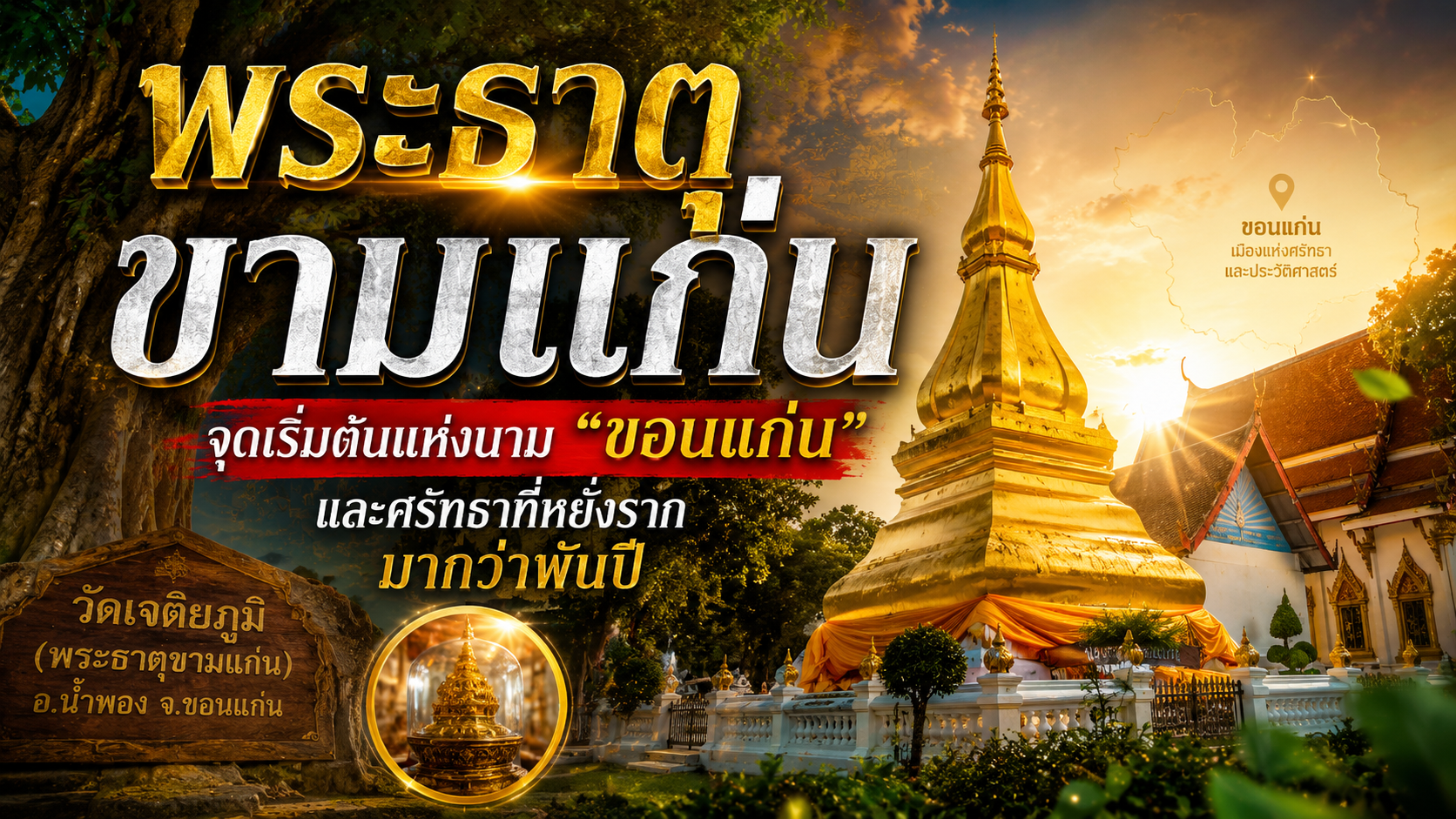
พระธาตุขามแก่น : จุดเริ่มต้นแห่งนาม “ขอนแก่น” และศรัทธาที่หยั่งรากมากว่าพันปี
“บางครั้ง…ชื่อของเมืองทั้งเมือง ก็เริ่มต้นจากต้นไม้เพียงต้นเดียว”
หากมีใครถามว่า “หัวใจของจังหวัดขอนแก่นอยู่ที่ไหน” หลายคนอาจนึกถึงบึงแก่นนคร ถนนมิตรภาพ หรือความเจริญของเมืองใหญ่แห่งภาคอีสาน แต่หากย้อนเวลากลับไปก่อนที่เมืองขอนแก่นจะถือกำเนิดขึ้นหลายร้อยปี คำตอบนั้นอาจอยู่ที่วัดเก่าแก่แห่งหนึ่ง ในอำเภอน้ำพอง ซึ่งผู้คนรู้จักกันในชื่อ พระธาตุขามแก่น สถานที่แห่งนี้ไม่ได้เป็นเพียงโบราณสถาน หากแต่เป็นรากเหง้าของชื่อ “ขอนแก่น” และเป็นศูนย์รวมศรัทธาที่เชื่อมโยงผู้คนกับพระพุทธศาสนา ประวัติศาสตร์ และอัตลักษณ์ของภูมิภาคอีสานมานานนับพันปี
ต้นไม้ที่กลายเป็นชื่อของเมือง
คำว่า “ขามแก่น” มาจากคำว่า “ต้นขาม” หรือต้นมะขามขนาดใหญ่ที่ยืนต้นอยู่บริเวณนี้ในอดีต ตำนานเล่าว่า ต้นขามต้นนี้มีแก่นแข็งแรงและศักดิ์สิทธิ์ เป็นที่ประดิษฐานพระบรมสารีริกธาตุ จนผู้คนเรียกสถานที่แห่งนี้ว่า “พระธาตุขามแก่น” กาลเวลาผ่านไป ภาษาพูดของชาวบ้านค่อย ๆ แปรเปลี่ยนจาก ขามแก่น เป็น ขอนแก่น จนกลายเป็นชื่อจังหวัดที่เรารู้จักในปัจจุบัน แม้ในเชิงภาษาศาสตร์จะมีข้อสันนิษฐานหลายแนวทางเกี่ยวกับที่มาของคำว่า “ขอนแก่น” แต่ตำนานพระธาตุขามแก่นยังคงเป็นเรื่องเล่าที่ทรงคุณค่าทางวัฒนธรรม และได้รับการยอมรับอย่างกว้างขวางว่าเป็นต้นกำเนิดเชิงจิตวิญญาณของชื่อเมือง
พระบรมสารีริกธาตุแห่งลุ่มน้ำชี
ตามตำนานอุรังคธาตุ ซึ่งเป็นวรรณกรรมสำคัญของลุ่มน้ำโขง กล่าวไว้ว่า หลังจากพระพุทธเจ้าปรินิพพาน พระอรหันต์ได้นำพระบรมสารีริกธาตุไปประดิษฐานยังสถานที่สำคัญหลายแห่งทั่วภูมิภาค หนึ่งในนั้นคือบริเวณต้นขามใหญ่แห่งนี้ พระมหากัสสปเถระ พร้อมพระอรหันต์จำนวนหนึ่ง ได้อัญเชิญพระอุรังคธาตุส่วนหนึ่งมาบรรจุไว้ใต้ต้นขาม และสร้างพระเจดีย์ขึ้นเพื่อเป็นพุทธบูชา เรื่องเล่านี้ทำให้พระธาตุขามแก่นกลายเป็นหนึ่งในพระธาตุสำคัญของภาคอีสาน และเป็นศูนย์รวมศรัทธาของผู้คนมาหลายชั่วอายุคน
ศิลปกรรมที่สะท้อนอารยธรรมลุ่มน้ำโขง
องค์พระธาตุในปัจจุบันมีลักษณะเป็นเจดีย์ทรงสี่เหลี่ยมย่อมุมไม้สิบสอง ฐานเป็นศิลปะล้านช้าง ผสมผสานอิทธิพลศิลปกรรมพื้นถิ่นอีสาน สีทองอร่ามขององค์พระธาตุตัดกับท้องฟ้าสีคราม กลายเป็นภาพที่เรียบง่าย แต่สง่างามอย่างยิ่ง แม้ผ่านการบูรณะหลายครั้งตามกาลเวลา แต่ยังคงรักษารูปแบบของพระธาตุโบราณไว้ได้อย่างงดงาม ภายในบรรจุพระบรมสารีริกธาตุอันเป็นที่เคารพสูงสุดของพุทธศาสนิกชน
ศูนย์รวมแห่งความศรัทธา
ตลอดทั้งปี ผู้คนจากทั่วประเทศเดินทางมาสักการะพระธาตุขามแก่นอย่างไม่ขาดสาย โดยเฉพาะในช่วงเทศกาลประจำปี ประชาชนจะร่วมเวียนเทียน ถวายผ้าห่มพระธาตุ ฟังธรรม และประกอบพิธีกรรมตามประเพณีอีสาน สำหรับชาวขอนแก่น พระธาตุขามแก่นไม่ใช่เพียงวัดเก่าแก่ แต่คือ “หลักชัย” ทางจิตใจ เป็นสถานที่ที่ผู้คนมักเริ่มต้นชีวิตใหม่ ขอพร ก่อนเดินทาง ก่อนสอบ ก่อนทำธุรกิจ หรือเมื่อเกิดเหตุการณ์สำคัญในชีวิต มากกว่าสถานที่ท่องเที่ยว ในยุคที่เมืองขอนแก่นเติบโตเป็นมหานครแห่งอีสาน พระธาตุขามแก่นกลับยิ่งมีคุณค่ามากขึ้น เพราะเป็นเครื่องเตือนใจว่า ความเจริญของเมือง ไม่ได้เริ่มต้นจากตึกสูง ถนน หรือเทคโนโลยี แต่เริ่มต้นจากศรัทธาของผู้คน เมืองที่รู้จักรากเหง้าของตนเอง ย่อมรู้ว่าจะเดินไปทางใดในอนาคต
มรดกที่ควรส่งต่อ
พระธาตุขามแก่นเป็นทั้งโบราณสถาน ศาสนสถาน และเอกลักษณ์ทางวัฒนธรรมของจังหวัดขอนแก่น เป็นจุดเชื่อมโยงระหว่างตำนาน ประวัติศาสตร์ และวิถีชีวิตของผู้คนในลุ่มน้ำชี ไม่ว่าจะมองในฐานะนักประวัติศาสตร์ นักโบราณคดี นักเดินทาง หรือผู้แสวงหาศรัทธา พระธาตุแห่งนี้ล้วนมีเรื่องราวให้ค้นหา เพราะทุกก้อนอิฐขององค์พระธาตุ ล้วนบันทึกความทรงจำของผู้คนมาหลายศตวรรษ และทุกครั้งที่สายลมพัดผ่านยอดพระธาตุ ราวกับกำลังเล่าเรื่องเดิมซ้ำอีกครั้งว่า เมืองขอนแก่น…ไม่ได้ถือกำเนิดจากเพียงแผนที่ของรัฐ แต่ถือกำเนิดจากพระธาตุ ต้นขาม และศรัทธาของผู้คนที่สืบทอดต่อกันมานานนับพันปี
* พระธาตุขามแก่นตั้งอยู่ที่ วัดเจติยภูมิ (วัดพระธาตุขามแก่น) ตำบลบ้านขาม อำเภอน้ำพอง จังหวัดขอนแก่น
* เป็นพระธาตุคู่บ้านคู่เมืองที่สำคัญที่สุดแห่งหนึ่งของจังหวัดขอนแก่น
* เชื่อกันว่าเป็นต้นกำเนิดของชื่อ “ขอนแก่น”
* มีความเกี่ยวข้องกับตำนานอุรังคธาตุ ซึ่งเป็นวรรณกรรมสำคัญของภูมิภาคลุ่มน้ำโขง
* งานนมัสการพระธาตุขามแก่นจัดขึ้นเป็นประจำทุกปี มีพุทธศาสนิกชนเดินทางมาร่วมงานจากทั่วภาคอีสาน
Phra That Kham Kaen: The Origin of the Name “Khon Kaen” and a Faith Rooted for More Than a Thousand Years
“Sometimes… the name of an entire city begins with a single tree.”
If someone were to ask, “Where is the heart of Khon Kaen Province?” Many people might think of Bueng Kaen Nakhon, Mittraphap Road, or the vibrant urban landscape of northeastern Thailand. Yet, if we travel back several centuries before the city of Khon Kaen officially came into existence, the answer may be found at an ancient temple in Nam Phong District—known today as Phra That Kham Kaen. More than an archaeological monument, this sacred site is regarded as the spiritual birthplace of the name “Khon Kaen.” For over a millennium, it has stood as a center of Buddhist devotion, historical memory, and the cultural identity of the Isan region.
The Tree That Gave a City Its Name
The name “Kham Kaen” derives from the Thai word “kham,” meaning tamarind tree. According to local tradition, a magnificent ancient tamarind tree once stood on this very site. Its heartwood—strong, enduring, and considered sacred—became the place where the Buddha’s sacred relics were enshrined. As a result, the site came to be known as Phra That Kham Kaen, literally “The Sacred Stupa of the Tamarind Heartwood.” Over generations, local pronunciation gradually evolved: Kham Kaen → Khon Kaen Eventually, this transformation gave rise to the modern name of the province. Although linguists have proposed several theories regarding the origin of the name “Khon Kaen,” the legend of Phra That Kham Kaen remains one of the most cherished cultural traditions and is widely regarded as the spiritual origin of the city’s identity.
The Sacred Relics of the Chi River Basin
According to the Urangkathat Legend, one of the most important Buddhist literary traditions of the Mekong Basin, after the Buddha attained Parinirvana, groups of enlightened monks carried His sacred relics to various regions throughout mainland Southeast Asia. One of those sacred destinations was the site beneath the great tamarind tree. The legend tells that Venerable Mahākassapa, together with other arahants, enshrined a portion of the Buddha’s relics beneath the tree before constructing a stupa as an offering of devotion to the Enlightened One. Whether understood as sacred history or spiritual tradition, this story elevated Phra That Kham Kaen into one of the most revered Buddhist monuments in northeastern Thailand and a pilgrimage destination for generations of devotees.
Architecture Reflecting the Civilization of the Mekong Region
The present stupa is designed as a twelve-cornered square pagoda, a classic architectural form found throughout mainland Southeast Asia. Its base reflects the artistic influence of the Lan Xang Kingdom, blended harmoniously with local Isan craftsmanship. The golden stupa rises gracefully against the brilliant blue sky, creating an image of remarkable simplicity and timeless elegance. Although restored several times throughout history, the monument has carefully preserved the character and dignity of an ancient sacred stupa. Within its sanctified chamber are believed to rest the revered relics of the Buddha, making it one of the most sacred places for Thai Buddhists.
A Living Center of Faith
Throughout the year, pilgrims from across Thailand travel to Phra That Kham Kaen to pay homage. During the annual temple festival, thousands gather to participate in candlelight processions, ceremonial cloth offerings to the stupa, Buddhist sermons, and traditional Isan religious rituals. For the people of Khon Kaen, Phra That Kham Kaen is far more than an ancient temple. It is a spiritual anchor. A place where people come to begin a new chapter of life, seek blessings before a journey, pray before examinations, ask for success in business, or find comfort during life’s most significant moments. Today, Khon Kaen has grown into one of northeastern Thailand’s leading metropolitan centers, renowned for education, commerce, healthcare, and innovation. Yet as the city continues to develop, Phra That Kham Kaen becomes even more meaningful. It reminds us that true prosperity is not built solely upon skyscrapers, highways, or technology. Rather, it begins with the faith, wisdom, and shared values of its people. A city that remembers its roots will always know where it is headed.
A Heritage Worth Preserving
Phra That Kham Kaen is simultaneously an archaeological monument, a sacred Buddhist sanctuary, and one of the defining cultural symbols of Khon Kaen Province. It serves as a bridge connecting legend, history, and the everyday lives of communities throughout the Chi River Basin. Whether viewed through the eyes of a historian, an archaeologist, a traveler, or a spiritual seeker, this sacred site offers countless stories waiting to be discovered. Every brick within the stupa carries the memories of generations. Every breeze passing over its golden spire seems to whisper the same timeless message: Khon Kaen was not born merely from political boundaries or administrative maps. It was born from a sacred stupa, an ancient tamarind tree, and a faith that has endured for more than a thousand years.
* Phra That Kham Kaen is located at Wat Chediyaphum (Wat Phra That Kham Kaen), Ban Kham Subdistrict, Nam Phong District, Khon Kaen Province, Thailand.
* It is one of the most revered and historically significant sacred stupas in Khon Kaen Province.
* Local tradition holds that it is the spiritual origin of the name “Khon Kaen.”
* The site is closely associated with the Urangkathat Legend, one of the most influential Buddhist literary traditions of the Mekong region.
* The annual Phra That Kham Kaen Festival attracts thousands of Buddhist pilgrims from across northeastern Thailand who gather to pay homage and participate in traditional religious ceremonies.

Recommended for you