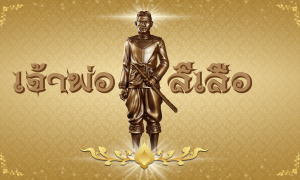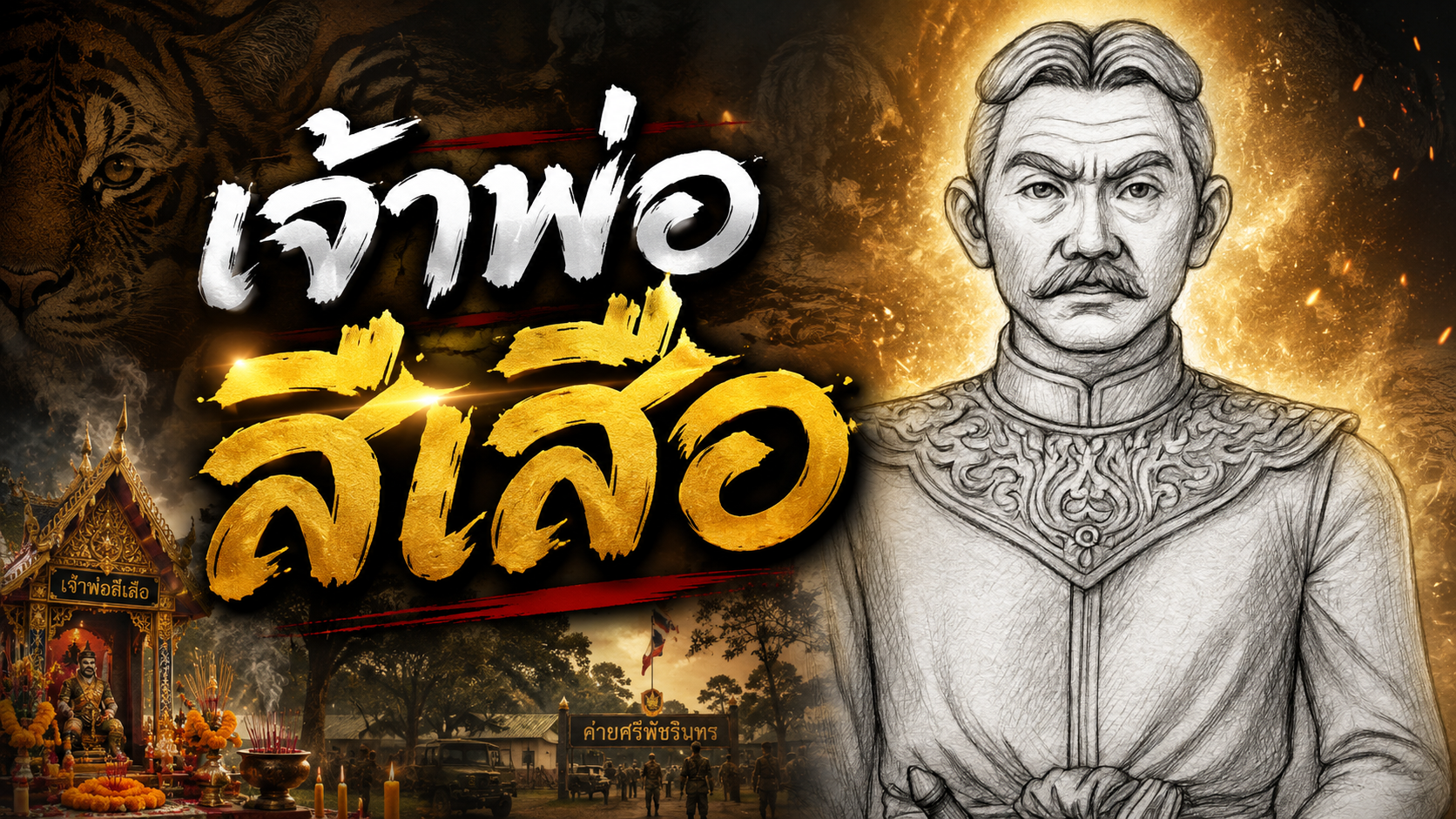
เจ้าพ่อสีเสือ
วิญญาณผู้พิทักษ์แห่งผืนป่าศิลา และศรัทธาที่อยู่คู่ค่ายทหารขอนแก่น
ก่อนถนนจะตัดผ่าน ก่อนอาคารและชุมชนจะขยายตัว และก่อนพื้นที่แห่งนี้จะกลายเป็นส่วนหนึ่งของเมืองขอนแก่นในปัจจุบัน ดินแดนแถบตำบลศิลาเคยเป็นพื้นที่ป่า มีบึงทุ่งสร้างและผืนดินกว้างใหญ่ทอดตัวอยู่ท่ามกลางธรรมชาติ และท่ามกลางภูมิประเทศแห่งนั้น มีเรื่องเล่าหนึ่งถูกส่งต่อจากคนรุ่นหนึ่งไปสู่อีกรุ่นหนึ่ง เรื่องของ “เจ้าพ่อสีเสือ”
ดวงวิญญาณศักดิ์สิทธิ์ที่ชาวศิลาและผู้คนในพื้นที่ให้ความเคารพมาอย่างยาวนาน เรื่องราวของเจ้าพ่อสีเสืออาจไม่มีหลักฐานทางประวัติศาสตร์ที่สามารถบอกได้อย่างชัดเจนว่า ท่านมีนามเดิมว่าอะไร เกิดในยุคสมัยใด หรือเคยดำรงตำแหน่งใด แต่ในโลกของความเชื่อ บางครั้งสิ่งที่ทำให้เรื่องราวหนึ่งดำรงอยู่มิใช่เพียงเอกสาร หากคือ “ความทรงจำร่วมของผู้คน” และความทรงจำนั้นยังคงมีชีวิตอยู่จนถึงปัจจุบัน
ตำนานแห่งป่ามะม่วง
ตามความเชื่อที่เล่าสืบต่อกันมาของชุมชนชาวศิลา เชื่อกันว่า ในอดีตมี ดวงวิญญาณของขุนนางระดับสูงในกองทัพไทยโบราณ มาสถิตอยู่บริเวณป่ามะม่วงในพื้นที่ซึ่งต่อมากลายเป็นค่ายทหาร ไม่มีใครทราบแน่ชัดว่าท่านเดินทางมาถึงสถานที่แห่งนี้เมื่อใด ไม่มีใครสามารถยืนยันได้ว่าท่านเคยผ่านสงครามใด และไม่มีบันทึกที่สมบูรณ์พอจะบอกเราว่า เหตุใดดวงวิญญาณของขุนนางนักรบผู้นั้นจึงผูกพันกับผืนแผ่นดินแห่งนี้
สิ่งที่หลงเหลืออยู่คือเรื่องเล่า เรื่องเล่าที่ค่อย ๆ กลายเป็นความศรัทธา ผู้คนเชื่อว่าดวงวิญญาณดังกล่าวเป็นผู้มีบารมี มีอำนาจ และคอยปกปักรักษาพื้นที่แห่งนี้ จนได้รับการเรียกขานด้วยความเคารพว่า “เจ้าพ่อสีเสือ” ชื่อซึ่งต่อมาไม่ได้เป็นเพียงชื่อของสิ่งศักดิ์สิทธิ์ประจำท้องถิ่น แต่กลายเป็นส่วนหนึ่งของความสัมพันธ์ระหว่างชุมชน ผืนดิน และทหารที่เข้ามาประจำการในพื้นที่
เมื่อผืนป่ากลายเป็นค่ายทหาร
จุดเปลี่ยนสำคัญของพื้นที่เกิดขึ้นในช่วงก่อนการเปลี่ยนแปลงการปกครองของประเทศไทย ตามประวัติที่ถ่ายทอดไว้ พระยาเริงรุกปัจจามิตร ผู้บังคับการจังหวัดทหารบกนครราชสีมาในขณะนั้น ได้นำกองทหารม้ามาตั้งกำลังในจังหวัดขอนแก่น เมื่อพิจารณาภูมิประเทศบริเวณ บึงทุ่งสร้างและตำบลศิลา พบว่าพื้นที่แห่งนี้มีอาณาเขตกว้างขวางและมีความอุดมสมบูรณ์ เหมาะสำหรับการใช้เป็นพื้นที่ทางทหาร จึงมีการประสานงานกับ นายจำนงค์ ไชยสิทธิ์ กำนันตำบลศิลา อำเภอเมืองขอนแก่น เพื่อดำเนินการกำหนดพื้นที่สำหรับใช้ในราชการ และต่อมาได้รับการประกาศเป็นพื้นที่ค่ายทหารตามกระบวนการของกระทรวงกลาโหม
จากผืนป่าและพื้นที่ธรรมชาติ พื้นที่แห่งนี้จึงเริ่มเปลี่ยนบทบาท เสียงของธรรมชาติค่อย ๆ ผสมเข้ากับเสียงฝีเท้าของทหาร เส้นทางในป่ากลายเป็นเส้นทางภายในค่าย และพื้นที่ซึ่งชาวบ้านเชื่อว่าเป็นสถานที่สถิตของดวงวิญญาณศักดิ์สิทธิ์ ก็ค่อย ๆ กลายเป็นส่วนหนึ่งของชีวิตผู้คนในค่ายทหาร แต่สิ่งหนึ่งที่ไม่ได้หายไปพร้อมกับการเปลี่ยนแปลงของภูมิประเทศ คือ ความเชื่อเรื่องเจ้าพ่อสีเสือ ตรงกันข้าม ความศรัทธานั้นกลับหยั่งรากลึกยิ่งขึ้น
พ.ศ. 2503 : เมื่อความศรัทธามีสถานที่สถิต
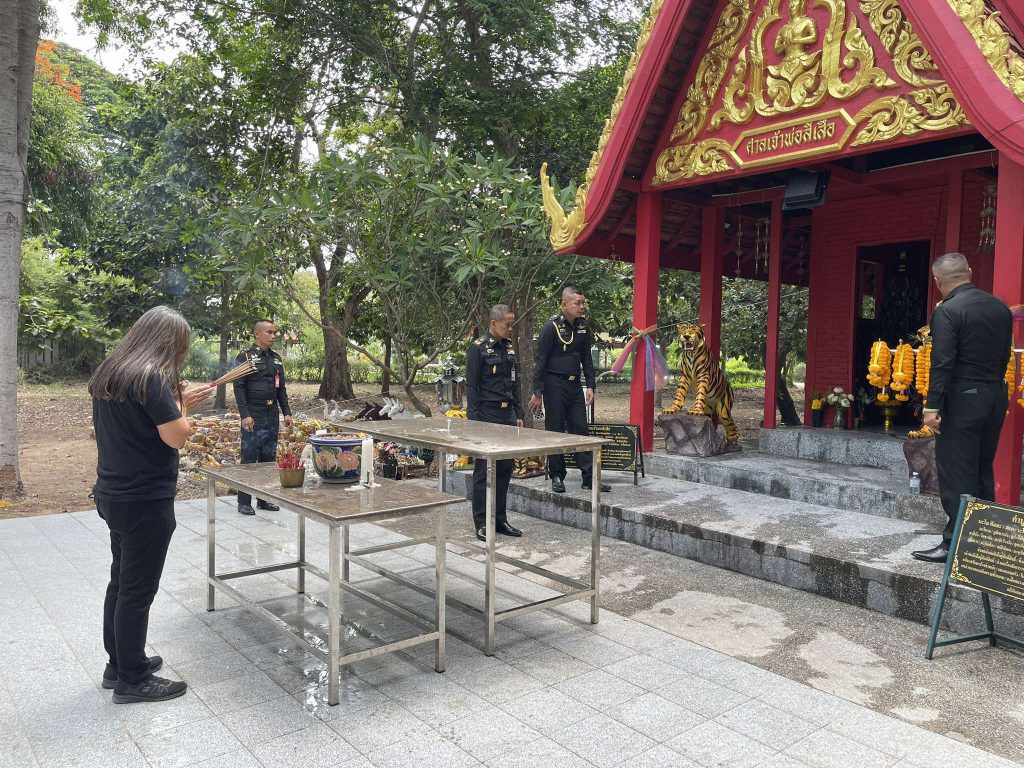
ในปี พ.ศ. 2503 ความเชื่อซึ่งเคยดำรงอยู่ในรูปของเรื่องเล่า ได้รับการทำให้เป็นรูปธรรมมากขึ้น พันโทจิรศักดิ์ ภูมิจิตร ผู้บังคับการจังหวัดทหารบกขอนแก่นในขณะนั้น ได้ดำเนินการก่อสร้าง ศาลเจ้าพ่อสีเสือ ขึ้น เพื่อเป็นสถานที่สถิตและเป็นศูนย์รวมความเคารพศรัทธาต่อเจ้าพ่อสีเสือ การก่อสร้างศาลไม่ได้สิ้นสุดเพียงการสร้างอาคาร ในวันประกอบพิธีบวงสรวงศาลครั้งแรก ยังมีการจัดพิธีสมโภชอย่างเป็นทางการ โดยนิมนต์พระสงฆ์จำนวน 6 รูปมาเจริญพระพุทธมนต์ และมี พระราชสารธรรมมุนี เจ้าคณะจังหวัดขอนแก่น เป็นประธานฝ่ายสงฆ์ ภาพของพิธีกรรมในวันนั้นสะท้อนลักษณะสำคัญประการหนึ่งของสังคมไทย นั่นคือการอยู่ร่วมกันของ พุทธศาสนา ความเชื่อเรื่องสิ่งศักดิ์สิทธิ์ และความเคารพต่อดวงวิญญาณผู้พิทักษ์สถานที่ ทั้งหมดไม่ได้ถูกแบ่งออกจากกันอย่างเด็ดขาด หากหลอมรวมกันอยู่ในวิถีชีวิตและวัฒนธรรมของผู้คน นับจากวันนั้น ศาลเจ้าพ่อสีเสือจึงมิใช่เพียงสิ่งปลูกสร้างภายในพื้นที่ทหาร แต่เป็นเสมือน “วิมานแห่งความศรัทธา” ของผู้คนที่เชื่อว่าเจ้าพ่อยังคงเฝ้ามองและปกปักรักษาผืนดินแห่งนี้
ผู้พิทักษ์ของทหารและชุมชน
สำหรับทหาร การดำรงชีวิตเกี่ยวข้องกับระเบียบ วินัย หน้าที่ และความไม่แน่นอน แต่ภายใต้เครื่องแบบและกฎระเบียบ ทหารก็ยังเป็นมนุษย์ที่มีครอบครัว มีความหวัง และต้องการสิ่งยึดเหนี่ยวทางจิตใจไม่แตกต่างจากคนทั่วไป ศาลเจ้าพ่อสีเสือจึงค่อย ๆ กลายเป็นสถานที่ที่ผู้คนเข้ามากราบไหว้ ขอพร และแสดงความเคารพ ก่อนหรือระหว่างการดำเนินชีวิตและปฏิบัติหน้าที่ ขณะเดียวกัน สำหรับชุมชนชาวศิลา เจ้าพ่อสีเสือไม่ได้ถูกจำกัดอยู่เพียงภายในรั้วของค่ายทหาร ผู้คนในชุมชนเดินทางมาสักการะกราบไหว้อยู่เสมอ โดยเชื่อว่าจะนำมาซึ่งความเป็นสิริมงคล ความปลอดภัย และความร่มเย็นแก่ตนเองและครอบครัว
ศาลเล็ก ๆ แห่งหนึ่งจึงทำหน้าที่บางอย่างที่มากกว่าการเป็นสถานที่ประกอบพิธีกรรม
เชื่อม “ทหาร” กับ “ชุมชน”
เชื่อม “อดีต” กับ “ปัจจุบัน”
และเชื่อมโลกของประวัติศาสตร์เข้ากับโลกของความเชื่อ
ศาลที่เปลี่ยนไป แต่ศรัทธายังคงเดิม
กาลเวลาทำให้ทุกสถานที่เปลี่ยนแปลง พื้นที่ซึ่งครั้งหนึ่งเคยเป็นป่ามะม่วงและพื้นที่ธรรมชาติ ค่อย ๆ ถูกแทนที่ด้วยอาคาร ถนน ชุมชน และโครงสร้างของเมืองขอนแก่นที่เติบโตขึ้น ศาลเจ้าพ่อสีเสือเองก็ได้รับการดูแลและปรับปรุงอย่างต่อเนื่องตามยุคสมัย โดยผู้บังคับบัญชาที่เข้ามารับหน้าที่ในพื้นที่ต่างให้ความสำคัญกับการบูรณะและพัฒนาศาลให้มีความสง่างามเหมาะสมกับการเป็นสถานที่เคารพสักการะ หน่วยงานและองค์กรที่เกี่ยวข้อง อาทิ สหกรณ์ออมทรัพย์ มทบ.23 จำกัด และ ศูนย์ฝึกนักศึกษาวิชาทหาร มณฑลทหารบกที่ 23 ก็มีส่วนในการสนับสนุนการดูแลสถานที่แห่งนี้ แต่สิ่งที่น่าสนใจที่สุดอาจไม่ใช่ว่าศาลถูกปรับปรุงมากี่ครั้ง
หากคือเหตุผลว่า… ทำไมเมื่อเวลาผ่านไปหลายสิบปี ผู้คนยังคงเดินทางมากราบไหว้เจ้าพ่อสีเสือ? คำตอบอาจไม่ได้อยู่ในสิ่งที่สามารถพิสูจน์ด้วยหลักฐานทางวิทยาศาสตร์ แต่อยู่ในประสบการณ์ ความเชื่อ และเรื่องราวของผู้คนจำนวนมากที่ถูกถ่ายทอดต่อกันมา
เมื่อ “ตำนาน” กลายเป็นมรดกของสถานที่
ในทางประวัติศาสตร์ เราอาจต้องแยกให้ชัดระหว่างสิ่งที่มีหลักฐานรองรับกับสิ่งที่เป็นเรื่องเล่าท้องถิ่น เราอาจไม่สามารถยืนยันได้ว่าเจ้าพ่อสีเสือเคยเป็นขุนนางคนใด เราอาจไม่สามารถระบุปีที่ท่านมีชีวิตอยู่ และเราอาจไม่สามารถตอบได้ว่า เหตุใดจึงเรียกท่านว่า “สีเสือ” อย่างแน่นอน แต่ในทางมานุษยวิทยาและวัฒนธรรม การไม่มีคำตอบเหล่านั้นไม่ได้ทำให้เรื่องราวไร้ความหมาย เพราะคุณค่าของตำนานบางเรื่องไม่ได้อยู่ที่ว่า “ทุกอย่างเกิดขึ้นตามนั้นจริงหรือไม่” แต่อยู่ที่ว่า “เหตุใดผู้คนจึงยังเลือกที่จะจดจำและเชื่อในเรื่องราวนั้น” เจ้าพ่อสีเสือจึงอาจถูกมองได้ในฐานะสัญลักษณ์ของ “ผู้พิทักษ์พื้นที่” — ตัวแทนของความกล้าหาญ อำนาจ หน้าที่ และความผูกพันกับแผ่นดิน สำหรับชาวบ้าน ท่านคือสิ่งศักดิ์สิทธิ์ที่เคารพ สำหรับทหาร ท่านคือผู้พิทักษ์ที่อยู่คู่พื้นที่ และสำหรับคนรุ่นหลัง เรื่องราวของท่านคือหน้าหนึ่งของประวัติศาสตร์ท้องถิ่นที่ไม่ควรถูกปล่อยให้เลือนหาย
ศรัทธาที่ยังคงมีชีวิต
มากกว่าหกทศวรรษนับจากการสร้างศาลในปี พ.ศ. 2503 โลกได้เปลี่ยนแปลงไปอย่างมหาศาล ขอนแก่นเติบโตจากเมืองในภูมิภาค สู่ศูนย์กลางสำคัญของภาคตะวันออกเฉียงเหนือ เมืองขยายตัว เทคโนโลยีเปลี่ยนวิถีชีวิต คนรุ่นใหม่เติบโตขึ้นท่ามกลางโลกที่สามารถตั้งคำถามกับทุกสิ่งได้ภายในเวลาเพียงไม่กี่วินาที แต่เมื่อเดินเข้าไปยังพื้นที่ของศาลเจ้าพ่อสีเสือ เรายังคงพบภาพที่ดำรงอยู่เหนือกาลเวลา ผู้คนพนมมือ ธูปถูกจุดขึ้น คำอธิษฐานถูกกล่าวอย่างแผ่วเบา และเรื่องราวของขุนนางนักรบจากอดีตยังคงถูกเล่าต่อ
บางที นี่อาจเป็นสิ่งที่ทำให้สถานที่แห่งหนึ่งกลายเป็นมากกว่าพิกัดบนแผนที่ เพราะสถานที่ไม่ได้ประกอบขึ้นจากผืนดินและสิ่งปลูกสร้างเท่านั้น แต่มันประกอบขึ้นจาก ความทรงจำ เรื่องเล่า และความศรัทธาของผู้คน ตราบใดที่ยังมีใครสักคนเดินเข้ามา ยกมือขึ้นพนม และเอ่ยนามของท่านด้วยความเคารพ… “เจ้าพ่อสีเสือ” ก็ยังคงอยู่ ไม่ใช่เพียงในศาล แต่ในความทรงจำของชุมชน บนผืนแผ่นดินศิลา และในอีกหน้าหนึ่งของประวัติศาสตร์เมืองขอนแก่นที่ยังคงถูกเขียนต่อไป
หมายเหตุด้านข้อมูล
บทความนี้เรียบเรียงในรูปแบบสารคดีเชิงประวัติศาสตร์–วัฒนธรรม โดยยึดข้อมูลประวัติศาลเจ้าพ่อสีเสือที่ให้มาเป็นหลัก และแยกส่วนที่เป็น “ความเชื่อและเรื่องเล่าสืบต่อกันมา” ออกจากข้อเท็จจริงทางประวัติศาสตร์ เพื่อไม่ทำให้ตำนานถูกนำเสนอเสมือนเป็นข้อเท็จจริงที่พิสูจน์แล้ว
หากจะนำบทความนี้ไปเผยแพร่ในลักษณะสารคดีจริง ควรตรวจสอบ ช่วงปี พ.ศ. ของพระยาเริงรุกปัจจามิตร และช่วงดำรงตำแหน่งของพันโทจิรศักดิ์ ภูมิจิตร จากเอกสารราชการเพิ่มเติม เนื่องจากตัวเลขปีในต้นฉบับบางตำแหน่งดูเหมือนมีตัวเลขตกหล่นหรือคลาดเคลื่อน
Chao Pho Si Suea
The Guardian Spirit of Sila and a Legacy of Faith in Khon Kaen
Long before roads cut across the landscape, before military buildings rose from the ground, and before Khon Kaen expanded into the major city we know today, the area around Sila was once dominated by forests, wetlands, and vast open land surrounding Bueng Thung Sang. Within that landscape, one story has endured across generations. It is the story of “Chao Pho Si Suea” — a sacred guardian spirit whose presence has long been revered by the people of Sila and those connected to the military community of Khon Kaen.
There is no surviving historical record that clearly identifies his original name, the exact period in which he lived, or the position he once held. Yet in the cultural memory of a community, history is not preserved through documents alone. Sometimes, it survives through stories. And when a story continues to be told, believed, and respected generation after generation, it becomes part of the identity of a place.
The Spirit in the Mango Forest
According to an oral tradition passed down among the people of Sila, the area was once believed to be inhabited by the spirit of a high-ranking nobleman or military commander from ancient Siam. His spirit was said to reside in a mango forest located within what would later become a military camp. Who was he? From which period of Thai history did he come? What battles had he fought? And why did his spirit become connected to this particular land? No surviving evidence provides definitive answers. What remains is the legend. Over time, local people came to believe that this powerful spirit watched over the land and protected those who lived and worked there. He eventually became respectfully known as: “Chao Pho Si Suea.” His name came to represent more than a mysterious spirit of the forest. It became associated with protection, courage, authority, and guardianship.
When the Forest Became a Military Camp
The history of the area entered a new chapter when military forces began establishing a permanent presence in Khon Kaen. According to the historical account preserved by the shrine, Phraya Roeng Ruk Patchamit, then commander of the Nakhon Ratchasima military district, brought cavalry forces to Khon Kaen. The geography surrounding Bueng Thung Sang and Sila offered extensive land and favorable natural conditions, making it suitable for military purposes. Coordination was therefore undertaken with Mr. Chamnong Chaisit, Kamnan of Sila Subdistrict, Mueang Khon Kaen District, to designate the area for government use. It was subsequently developed and formally recognized as a military camp under the Ministry of Defence. The landscape began to change. Forest paths became military routes. Open land became training grounds. Buildings gradually replaced parts of the natural landscape. Yet one thing remained. The belief in Chao Pho Si Suea did not disappear. Instead, as military life became increasingly rooted in the area, reverence for the guardian spirit grew stronger.
1960: Giving the Guardian Spirit a Home
A major turning point came in 1960 (B.E. 2503). Lieutenant Colonel Jirasak Phumijit, who served as commander of the Khon Kaen military district, initiated the construction of the Chao Pho Si Suea Shrine. The shrine was created as a sacred dwelling place for the guardian spirit and as a physical center for the faith that had long existed within the community. Its inauguration was more than the opening of a new structure. During the first ceremonial offering and celebration of the shrine, six Buddhist monks were invited to chant sacred prayers, with Phra Ratchasan Thammuni, the Ecclesiastical Provincial Governor of Khon Kaen, presiding over the monastic ceremony. It was a scene that reflected a distinctive characteristic of Thai spiritual culture. Buddhism, ancestral beliefs, guardian spirits, and local traditions were not necessarily regarded as separate worlds. They could exist together. They could reinforce one another. And together they could create a spiritual landscape deeply connected to the identity of a community. From that moment onward, the Chao Pho Si Suea Shrine became more than a physical structure within a military compound. It became a home of faith.
Guardian of Soldiers and Community
Military life is built around discipline, duty, courage, and responsibility. But behind every uniform is a human being. A soldier has a family. A soldier experiences uncertainty. A soldier carries hopes and fears. And like people everywhere, soldiers may seek something greater than themselves to provide strength during difficult moments. Over time, the shrine became a place where soldiers and members of the military community could pay their respects, seek blessings, and find spiritual reassurance. But the influence of Chao Pho Si Suea extended beyond the military compound. For generations, people from the surrounding Sila community have also visited the shrine to worship and pray. Some come seeking protection. Others pray for success, prosperity, or safety. Many simply come to show respect to the sacred guardian they believe has watched over the land for generations. In this way, a small shrine gradually assumed a much larger role. It became a bridge between the military and the community. Between the past and the present. And between documented history and living belief.
The Shrine Changes, but the Faith Remains
Every place changes with time. The forests and open landscapes that once characterized this part of Khon Kaen have gradually given way to roads, buildings, communities, and the infrastructure of a growing city. The Chao Pho Si Suea Shrine has changed as well. Successive military commanders have renovated and improved the shrine, preserving its dignity and ensuring that it remains an appropriate place of worship. Organizations associated with the military community, including the 23rd Military Circle Savings Cooperative and the 23rd Military Circle Reserve Officer Training Center, have also contributed to its preservation and development. Yet perhaps the most important question is not how many times the shrine has been renovated.
The deeper question is: Why do people continue to come here? Why, after decades of social transformation, do people still stand before the shrine, raise their hands in prayer, and speak the name of Chao Pho Si Suea? The answer cannot necessarily be found in military records or historical archives. It lies in something more difficult to measure. Faith.
When Legend Becomes the Heritage of a Place
From a historical perspective, it is important to distinguish between documented evidence and oral tradition. We cannot conclusively identify the nobleman believed to have become Chao Pho Si Suea. We cannot determine precisely when he lived. Nor can we say with certainty how the name “Si Suea” originated. But from an anthropological and cultural perspective, the absence of those answers does not make the story meaningless. Because the significance of a legend does not always depend on whether every detail can be historically proven. Sometimes the more important question is:
Why have people continued to remember it?
Seen in this way, Chao Pho Si Suea represents the ancient idea of the guardian of the land — a spiritual protector connected to courage, authority, duty, and place. To local residents, he is a sacred presence. To generations of soldiers, he is a guardian associated with the land on which they serve. And to future generations, his story is part of Khon Kaen’s cultural heritage — one that deserves to be remembered before it disappears beneath the rapid transformation of the modern city.
A Faith That Is Still Alive
More than six decades have passed since the shrine was established in 1960. Khon Kaen has changed dramatically. What was once a provincial landscape has grown into one of the most important urban, educational, commercial, and transportation centers of Northeastern Thailand. The city continues to expand. Technology continues to reshape everyday life. New generations grow up in a world where almost anything can be questioned, searched, and analyzed within seconds. Yet at the Chao Pho Si Suea Shrine, something remarkably timeless remains. People still arrive. Hands are raised together in prayer. Incense is lit. Quiet wishes are made. And the story of an ancient warrior spirit continues to be told. Perhaps this is what transforms an ordinary location into a meaningful place. A place is never made from land and buildings alone. It is also made from memory, stories, rituals, and belief. And as long as someone continues to stand before the shrine, bow respectfully, and speak his name — Chao Pho Si Suea remains. Not only within the shrine itself, but within the memory of the Sila community, within the land that generations of soldiers have protected, and within one of the lesser-known but enduring chapters in the story of Khon Kaen.
Editorial Note
This article is written in a historical-documentary style inspired by long-form cultural storytelling. It is based primarily on the history of the Chao Pho Si Suea Shrine provided in the original source. Oral traditions and spiritual beliefs have intentionally been identified as beliefs, legends, or community narratives, rather than presented as historically verified facts.
Before publication as a formal historical documentary, the dates associated with Phraya Roeng Ruk Patchamit and the service period of Lieutenant Colonel Jirasak Phumijit should be independently verified against official military and provincial archives, as some dates in the original Thai source appear to contain missing or inconsistent digits.

Recommended for you